News & Updates
-
Technology Development for Ultrafast Printing of Metal Nanowire Electrodes
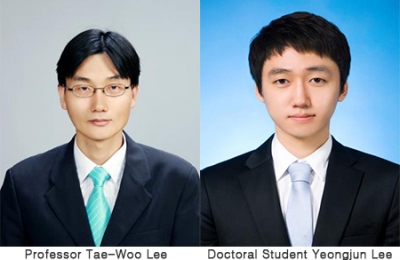
Professor Tae-Woo Lee's research team published in Advanced Materials Professor Tae-Woo Lee’s research team has developed technology for the high speed printing of microminiature and high integrated device electrodes that will work smoothly and efficiently in portable electronic devices. The research team, which consists of professor Tae-Woo Lee and doctoral student Yeongjun Lee of the Materials Science & Engineering department at POSTECH, published their findings in the Advanced Materials journal. Photolithography and electron-beam lithography are methods that are used to manufacture nanosized electrodes. These methods require a complex process and high process cost. Furthermore, previous research about metal electrodes and wiring were limited to metal electrodes higher than invisible 1 micrometer width. The research team succeeded in printing copper nanofibers with a width of several hundred nanometers by using electrohydrodynamic nanowire printing, and it has a similar electrical characteristic with general metals. It also succeeded in making a device using copper nanofiber electrodes of organic transistors, proving that the technology can be applied to the electrodes of future electronic devices. "This technology reduces lead time and cost remarkably compared with existing manufacturing methods of nano-electrodes and simplifies its method of construction. We will move up the commercialization of high integrated electronic devices using metal nano-electrodes,” said Professor Lee. “In particular, this technology will be used as a source technology to realize wearable computers, fiber electronic devices, and flexible displays which are expected to grow to 50 trillion won by 2020". This research can be used for various transparent electronic devices and high integrated circuits like displays, memories, solar batteries, touch screen panels. In particular, if this technology is combined with other domestic technologies related with optoelectronic device and printing nanoelectronics which have global competitiveness, the technology is expected to contribute to the great development of soft electronics in South Korea. Furthermore, this technology can be used to repair metal wiring defects effectively which occurs in manufacturing electronic devices like display panels, so the technology is expected to improve the yield in existing electronic industries. This research was supported by the Ministry of Science, ICT and Future Planning.
2014.12.09 3135 -
AP Forum Benchmarking Trip Highlights Regional Development and Partnership with European Cities
Vision, Partnership, and Leadership are the Keys to Spurring Local Development Leaders of the AP Forum (Advance Pohang Forum) participated in a 10 day benchmarking trip to Europe last month to discuss regional development and urban regeneration with political, business, and academic leaders in Manchester and Sheffield, UK and Dresden, Germany. POSTECH President Yongmin Kim led the delegation’s meetings with leaders in these three cities to share ideas on local development, innovation, and urban regeneration. The AP Forum leaders hope that the urban development practices that led to the renaissance of these industrial cities will assist in the future development direction of Pohang. This second year benchmarking trip focused on vision, partnership, and leadership as key areas for local development. The AP Forum leaders chose Manchester, Sheffield, and Dresden as benchmarking cities because of its ability to overcome industrial decline and successfully revitalize through urban regeneration and high technology innovation. These cities in particular have built industry-academic cooperation for cutting-edge technology. The delegation visited the city halls, universities, science complexes, and laboratories in each city that are the main agents for local development and innovation. They discussed with local leaders ways to make Pohang into a creative city in which science and technology, excellent human resources, and a diverse culture can coexist. President Kim will emphasize seven key areas for local development with the AP Forum in the effort to create a practical environment for industry-academic cooperation to develop Pohang into a creative tech city: 1) A stable and continuous leadership and a clear vision and partnership between government and local agencies; 2) A careful and systematic process for long term local development; 3) The important role that universities play in driving local development and innovation; 4) Academic and research collaboration as essential to forming a science city; 5) Technical commercialization of creative ideas and stimulating startups based on joint research between industry, university, and research institutes; 6) The development of a culture and tourism industry based on Pohang’s unique identity and great wealth of culture and tourism assets; 7) Making Pohang a livable, fascinating, and globalized city. President Kim will highlight the need to develop research clusters and foster hidden champions to prepare for changes in local industries. He will also emphasize the establishment of a cooperation and communication system among organizations where people can discuss future directions and objectives and share strategies for development. The AP Forum is a consultative group of 170 members consisting of local Pohang leaders. It was created by POSTECH in June 2012 to assist in the future development of Pohang. The Pohang Chamber of Commerce and Industry and the Pohang Steel Industry complex participate in the AP Forum.
2014.11.21 15308 -
University of Waterloo President Gives Distinguished Lecture at POSTECH
The president of the University of Waterloo in Canada, Feridun Hamdullahpur, gave a distinguished lecture titled Passion for learning, from Research to Impact: The Waterloo Story to the POSTECH community on November 3. President Hamdullahpur explained to an appreciative audience of POSTECH students, faculty, and staff the importance of entrepreneurship at a university as the key source of innovation and talent for the global community. He spoke to the cultural, policy, and programming dynamics that make an innovation university such as the University of Waterloo successful. Inspired students participated in a question and answer session following the lecture and asked how they could too become risk-takers and think outside of the box to successfully run their own startups. The topic was timely as POSTECH opened the APGC-Lab in September to facilitate entrepreneurship and startups on campus. The University of Waterloo took first place as Canada’s top university of innovation for the 23rd consecutive year and Best Overall for 2015 in Maclean’s magazine’s annual rankings of Canadian universities. It is home to the first and largest co-operative education program in the world. Earlier in the morning, President Hamdullahpur met with POSTECH President Yongmin Kim to discuss possible collaborative research and development. The University of Waterloo is one of POSTECH’s oldest partner institutions and the two institutions have enjoyed over two decades of successful collaboration and student exchange. President Hamdullahpur’s visit included a meeting with Pohang Vice Mayor Jae Hong Kim and tours of the Pohang Accelerator Laboratory (PAL) and the headquarters of the POSCO (Pohang Iron & Steel Company) .
2014.11.19 2710 -
Professors Develop Customized 3D Printed Implant for Facial Reconstruction
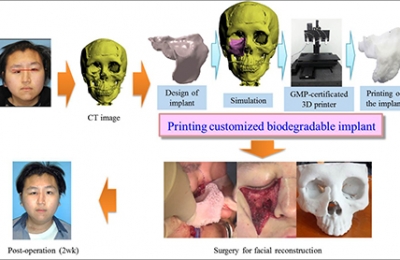
Despite having numerous advantages, clinical applications of 3D printed scaffolds for tissue regeneration are extremely rare. A team consisting of POSTECH Professor of Mechanical Engineering Dong-Woo Cho, Professor Jong Won Rhie of the Department of Plastic Surgery College of Medicine at the Catholic University of Korea, and Won-Soo Yun of T&R Biofab Co., have applied 3D printing technology for correcting an asymmetric face caused by the removal of a tumor in a patient about a decade ago. The patient had trauma in the right malar region and because of this his eyes were misaligned. In this type of deformity, a rib fragment is generally collected and implanted for correcting the position of the eye, but this approach leads to an additional complication to the costal region of the donor site. The surgeon’s skill could also affect the operation results. To address the current limitations of facial reconstruction, the team used 3D printing technology to create custom-made implants. The 3D model of the implant was designed with the technical support of FusionTech Co. and realized by Good Manufacturing Practice (GMP) certificated 3D printing systems. The left side of the patient’s face was mirrored to generate a perfect implant matching the deformed area for the right side of the face with enophthalmos. The distinction of this reconstruction is the implant, which consisted of a FDA-approved biodegradable polymer, Poly (ϵ‐caprolactone) (PCL), for bone tissue regeneration. This type of PCL implant has been known to degrade in the body within 1 to 2 years with very little immune responses. Moreover, PCL has a high potential to regenerate soft and hard tissue/organ as demonstrated by several research group worldwide. The implant will be replaced by regenerated bone tissue from the adjacent bonny region. The printing of a scaffold-type implant with a porous structure requires more precise 3D printing technology compared to printing a general solid type structure. A GMP-certificated 3D printing system to fabricate the scaffold-type implant for clinical use was supported by T&R Biofab Co., which has been producing the biodegradable patch using 3D printing systems for the regeneration of bone/skin tissues. Another advantage of the implant is that it reduces the general operative time from 8 hours to 2 hours. After this corrective surgery, the left eye of the patient was successfully realigned to that of the right eye and he was able to return to his normal life within a few days. The team will monitor the patient’s progress over the next 2 years. This project highlights the successful clinical application of 3D printing technology to regenerate tissue or organ by patient-specific customized-designing and computer-aided manufacturing. The team hopes that the success of this surgery will pave the way for the clinical use of 3D printing based biomedical applications and provide a better health care delivery system for many patients.
2014.10.23 3678 -
Professor Chi-Hyuck Jun Appointed as President of APIEMS
Professor Chi-Hyuck Jun in the Department of Industrial and Management Engineering was appointed as the next president of APIEMS and an APIEMS fellow at the 15th APIEMS (Asia-Pacific Industrial Engineering and Management Systems) conference which was held in Jeju during October 12-15, 2014. Professor Jun was also the General Chair of this year’s APIEMS conference. Professor Jun will serve as President of APIEMS for 2017 and 2018. The APIEMS fellowship is given to outstanding leaders in the profession who have made regional and international contributions to industrial engineering and management. The nomination is made through the recommendation of APIEMS board members. APIEMS was initiated from two conferences held in 1998: the China-Japan Joint Conference on Industrial Engineering and Management in Beijing, China and the Korea-Japan Joint Conference on Industrial Engineering and Management in Daejeon, South Korea. Excellent results were produced and the two conferences merged to form a single conference in 1999 when the 2nd APIEMS conference was held in Kanazawa, Japan. Since then, APIEMS has rapidly emerged as an important forum for the exchange of ideas and information about the latest developments in the field of industrial engineering and management systems among professionals in the Asia-Pacific region. APIEMS conferences serve as a forum for the exchange of ideas and facilitate collaboration among participants from different countries, providing the much needed exposure to new research efforts and findings.
2014.10.22 2986 -
Injectable Hydrogels for Long-Term Cell Therapy
Professor Sei Kwang Hahn and co-workers in the Department of Materials Science and Engineering at POSTECH, and Professor Allan S. Hoffman at the University of Washington, have investigated various kinds of hydrogels developed for stem cell therapy as a regenerative medicine. Their work is published in the latest edition of Progress in Polymer Science (IF = 26.854), an international peer-reviewed scientific journal in the field of polymer science and engineering. The paper entitled “In situ-forming injectable hydrogels for regenerative medicine” describes advanced polymeric hydrogel technologies to improve the stability of stem cells in the body and prolong their therapeutic effect. Particularly, the paper provides detailed description of in vivo light-guiding hydrogels for cell-based sensing and therapy developed by Prof. Hahn's research group and Prof. Andy Yun’s group at Harvard Medical School, which was published in Nature Photonics. In this research, optogenetic cells encapsulated in light-guiding hydrogels were implanted to produce insulin in the body for light-controlled therapy of diabetes for the first time in the world. In addition, real-time optical readout for the nanotoxicity of quantum dots was successfully demonstrated using optogenetic cells encapsulated in light-guiding hydrogels, attracting extensive academic attention. Furthermore, the paper also describes supramolecular hydrogels for long-term stem cell therapy developed in collaboration with Prof. Kimoon Kim in the Department of Chemistry at POSTECH (a leader of the IBS Center). The genetically engineered stem cells encapsulated in injectable hydrogels produced anti-cancer therapeutic protein, resulting in effective inhibition of tumor growth with a significantly enhanced survival rate. This technology was transferred to Genexine, Inc. (CEO: Prof. Young Chul Sung in the Department of Life Science at POSTECH) for the commercialization of stem cell therapeutics using injectable hydrogels. "This injectable hydrogel for regenerative medicine can greatly improve the efficacy of currently existing stem cell therapeutics for the treatment of intractable diseases," said Prof. Hahn. The research was supported by the Bio & Medical Technology Development Program funded by the Korean government (MEST).
2014.09.24 3148 -
International Biological Physics Conference Honors Professor Wokyung Sung’s Retirement After 28 Years at POSTECH
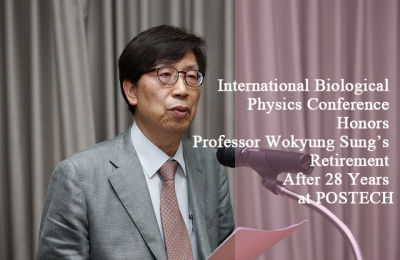
The international conference “Surmounting the Insurmountable – Pathways of Biological Physics” was held on August 28-30th at the POSCO International Center at POSTECH to commemorate the retirement of Professor Wokyung Sung of the Department of Physics. The conference highlighted the pathways of statistical biological physics covering the topics Professor Sung has worked on throughout his career, namely 1) Statistical, Soft Matter, and Stochastic Physics, 2) Single-molecule Biophysics, 3) Membrane and Cellular Physics/ Self-assembly and organization, and 4) Biopolymer Translocation and Related Dynamics. Professor Sung has contributed widely to the physical understanding of basic biological processes that emerge at the mesoscopic level. In particular, he has pioneered the problem of polymer translocation through a membrane [Phys. Rev. Lett. 77, 783 (1996)], which later engendered a whole new separate field in biological physics, which was highlighted during the last session of the conference. He also has served as an editor-in-chief of the Journal of Biological Physics, an international journal published by Springer. For his seminal contributions to science and in particular to biological physics, Prof. Sung was awarded a Medal of Science and Technology bestowed by the Korean Government in 2010. As the first chairman of the physics department, as early as 1986-89, Professor Sung played a pivotal role in establishing and developing the department, while serving in founding the university. He also played a major role in attracting the Asia Pacific Center for Theoretical Physics (APCTP) to POSTECH, for which he later served as a Science Council Member as well as a Special Advisor. “Inspired by the vision of our late, the first president of POSTECH, Dr. Kim Ho Gil, I returned to Korea from the USA in 1986, and joined in founding this new university,” said Professor Sung in his retirement speech. “In a short period of time, despite many difficulties…POSTECH has grown to become an internationally renowned university. And I am truly happy to have been a part of founding such university and physics department.” An emeritus professorship was awarded to him at the retirement ceremony and conference banquet. He used the occasion to donate a scholarship fund of 50 million KRW (~$50,000 USD) for undergraduate students who make the most outstanding academic improvements in the field of physics. Professor Sung received his bachelor’s degree in physics from Seoul National University and his Ph.D. in physics at the State University of New York at Stony Brook. He will continue work as a research professor at the physics department as well as a distinguished research fellow at the IBS Center for Self-assembly and Complexity located at POSTECH.
2014.09.12 44820 -
POSTECH Scientists Research RNA Polymerase Contribution to Gene Expression, Published in Nature Communications
Noise plays a key role in important biological processes, such as bacterial antibiotics resistance, cancer development, and stem cell differentiation. Physics can explain much of this biological phenomenon. Professor Nam Ki Lee of the Department of Physics and the School of Interdisciplinary Bioscience and Bioengineering with Department of Physics graduate students Sora Yang, Seunghyeon Kim, Cheolhee Kim, Hyeong Jeon An and Professor Jaeyoung Sung of Chung-Ang University studied how cells propagate noise using RNA polymerase. Their research was published in this month’s Nature Communications journal. The uncertainty, a common concept in physics, exists in living cells because all biological processes are governed by a stochastic chemical reaction. Even genetically identical cells exhibit remarkable diversity in protein expression level, which is termed a cell-to-cell variation or noise. Noise may significantly contribute to the difference even between identical twins. Recent studies show that noise plays crucial functional roles in cells, such as state switching, differentiation, and cell fate determination. However, the origin of protein expression noise has not yet been addressed. Especially, concentration variation of RNA polymerase (RNAP), a key machinery performing transcription, has been viewed to be one of the major noise sources. How RNAP generates or regulates noise has not been investigated yet because this protein is an essential factor for cell growth. This is the first study to demonstrate that transcription, a process of generating mRNA, is one of the major noise sources. The research team proposed a new model of how RNAP concentration variation propagates to protein expression noise. In the study, the research team used T7 RNAP to control the RNAP concentration in livingEscherichia coli (E.coli) cells. As a result, how the variation of RNAP concentration effects on the protein expression noise was successfully addressed. In the future, these findings may contribute to interpret many complex biological processes, which cannot be understood at a genomic level. “Our approach can be applied to investigate the bacterial antibiotics resistance and to control the noise level in living cells, which was not possible before,” said Professor Lee. “The approach can also be applied to study the mechanism of the state transition of cells, such as cancer development and stem cell differentiation.” The research was supported by the MSIP (Ministry of Science, ICT and Future Planning), Korea under the “IT Consilience Creative Program” (NIPA-2014-H0201-14-1001) supervised by NIPA (National IT Industry Promotion Agency).
2014.09.05 3366 -
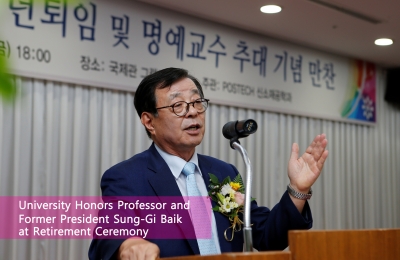
University Honors Professor and Former President Sung-Gi Baik at Retirement Ceremony
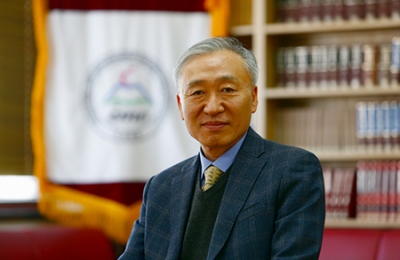
Professor Sung-Gi Baik was honored for his contributions to POSTECH and awarded the title of Emeritus Professor during his retirement ceremony at POSCO International Center on August 22. Baik was appointed a professor when POSTECH was founded in 1986. Baik has consecutively filled various posts (Department Head of Materials Science and Engineering, Dean of the Office of Admissions and Student Affairs, Dean of the Office of Planning, Director of the Pohang Accelerator Laboratory, Chairman of the University of Senate, and Vice President) at POSTECH for 27 years and was POSTECH’s fifth President from 2007 to 2011. In addition to his many years of service to POSTECH, Baik has made a very generous contribution of 100 million KRW ($98,000 USD) to a scholarship fund in his name that will foster global leaders in the field of Materials Science & Engineering. Baik, a ceramic materials scientist and expert in ferroelectric thin film material development whose research has been widely published in over 150 international journals, was a longtime member of the Department of Materials Science & Engineering at POSTECH since 1986. He was a member of the Office of Strategy R&D Planning at the Ministry of Knowledge Economy and the Atomic Energy Committee at the Ministry of Education, Science and Technology. He served as President of the Korean Ceramic Society and Chairman of the Presidential Advisory Council on Education, Science & Technology and the World Premier Materials Development Planning Committee at the Ministry of Knowledge Economy. Since 2014, he has served as Chairman of the University Structural Reform Supervision Committee. Baik received his bachelor’s degree in Metallurgical Engineering from Seoul National University and his Ph.D. degree in Materials Science from Cornell University where he received the McMullen Fellowship.
2014.08.27 3066 -
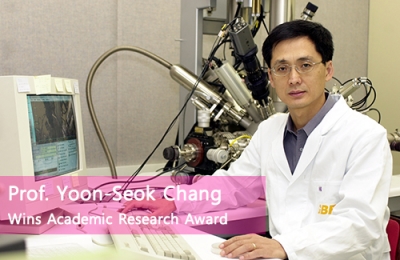
Prof. Yoon-Seok Chang Wins Korean Society of Environmental Engineers Academic Research Award
Professor Yoon-Seok Chang (School of Environmental Science and Engineering), a worldwide authority on dioxin, has been selected as a first prize winner of the academic research award by the Korean Society of Environmental Engineers. An awards ceremony was held at the Kimdaejung Convention Center on August 21st. Over the past 30 years, Professor Chang has published nearly 200 SCI papers and studies which include analyses of toxic substances such as dioxins and other endocrine on human health. His study of the environmental risks of bio-nanomaterials has recently received academic attention.
2014.08.22 2880